Other Recent Articles
French Country Travel Life Camera Caper – Part One
This French Country Travel Life Camera Caper is like the course of true love.It isn’t always smooth. Especially on the road of foreign travel. As your experience has no doubt confirmed. But don’t you find when those unexpected clouds of disaster (and aren’t they the worst kind?) do blacken your sky, they’re always worse when you’re abroad?
For the obvious reason: You’re in foreign territory. You don’t know the rules and regs. What button to push. Which color ink to use. Who to call. And when you do call your embassy’s 24 “emergency” line, you get a recording. Which says: “If this is a real honest ta gosh life threatening emergency, call this number. Which you do. And get..(you’re ahead of me already, aren’t you?)…yes,…no answer.
DA BG feels your pain. Because he’s been there, done that and has many tee-shirts to prove it. This is one such black cloud disaster movie:
I’m filming happily in a bucolic middle of nowhere, when my camcorder craps out. Cleverly realizing that the middle of nowhere “instant-photos-be-us” will be of no help, I high tail it for the big smoke. Paris. There in the New York of France I will surely receive an enthusiatic “customer service welcome.”
And, dear reader, I do. The only problem is, that my unit’s manufacturer’s idea of a “European Service Center” is one that simply distributes brochures extolling the virtues of it’s many products. (Reliability, bien sur, being one of them.)
My Homlesian powers of deduction and reason propel me to the logical conclusion in scant micro-seconds: It’s gotta go back home for repairs.


So it does. And I? What to do in Paris for the (at least) two weeks repairs will take? Happily, a friend has a vacant apartment in the heart of the 16th arrondissement. The “Beverly Hills” of Paris. Here live the folks who do not ask the price. They just buy.
I, on the other hand, just look.(And do my shopping at Monoprix – the discount supermart – where, I’m happy to report I did score great bottles of wine for under 3 euros more than once.)

As you might imagine (and perhaps even know?) the 16th is a “pleasant” place. With a capital “P.” A small (laid back expensive) village vibe. Resulting in a proliferation of sidewalk cafes and other ambulatory diversions.
On the leafy green side o’ things, the 16th has a small park – “Le Jardin du Poet” (“The Poet’s Garden) in which I spent many relaxing (brain turned off) hours. The Bois du Bologne, the major Paris park, is also relatively nearby. (Relative to your mode of transport.)
Part Two – Next Time.
THROW ME A BONE HERE,PEOPLE!
What are ya thinkin’?
French Country Travel Life Movies
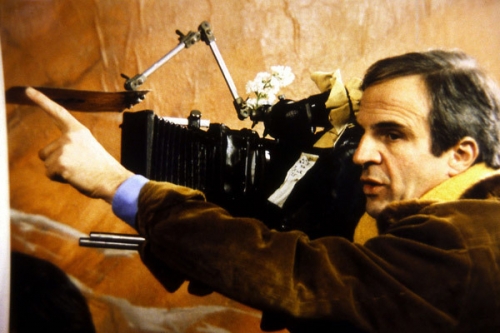
French Country Travel Life Movies and their urban counterparts have had an enormous effect on Cinema goers Worldwide. Particular the up n’ comin’ generation of filmmakers. (DA BG included!)
It began, back in the 60’s, when the traditional French film industry was turned on it’s ear by a new generation of young Parisian filmmakers who called themselves the “French New Wave”
Our cineophile pal Laure Van Ruymbeke surfs the wave further for us:
Out of the studio and into the light
For a long time French movies had traditionally been shot in studios, resulting in Paris being represented in a reconstructed and rather conservative way. Moreover, scenes of the capital filmed during the war were not readily adaptable to the screen. Such imagery had become less palatable to the French public, who sought to escape its sombre, everyday reality.
Upon gathering in the ‘Cahiers du Cinéma‘ (Notebooks on Cinema) editorial room, the New Wave’s future filmmakers – who were, chiefly, theorists – realised how artificial such studio-shot scenes really were.
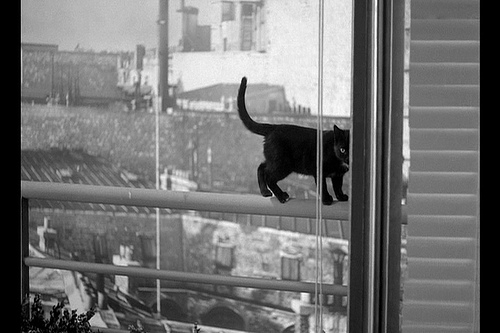
Helped by economic factors and rapidly evolving technology, these filmmakers decided to break free of the restrictions imposed on them by the era’s preferred aesthetics. By now it had become possible to film city scenes by night, and thanks to new high-speed reel, they were also able to use new lightweight cameras to shoot outdoors. In 1958, Louis Malle was the first director to try out these new technologies during the filming of ‘Elevator to the Gallows’.
This movie was followed by a series of experimental films which captured the turmoil occurring in the French capital, giving the cinema-goer a realistic impression of the city. These movies showed scenes that reflected a reality which were not retouched, dramatised or false.
The French capital as a background
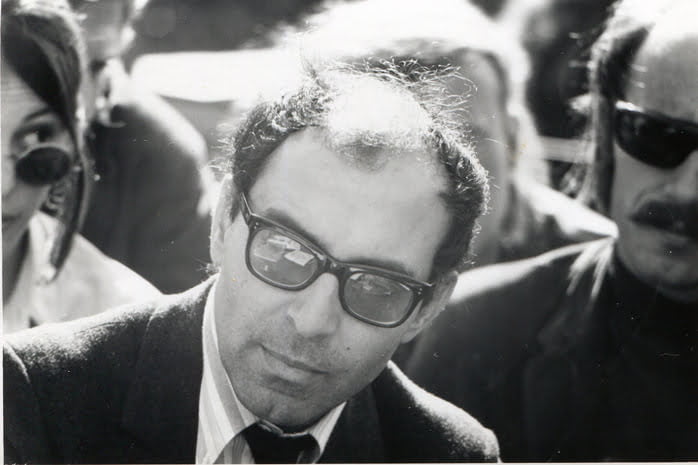
The New Wave showed Paris from an alternative angle. The filmmaker walked the streets of the French capital with his camera on his shoulder, following the actors. The filmmakers’ determination to find an authentic perspective led to the creation of a documentary-style approach to the representation of places, people and everything in front of the camera lens.
In Jean-Luc Godard’s ‘Breathless’, Paris is depicted as if in a news report. The famed director’s preference for realism was evidenced by a multitude of shots of busy Parisian streets, buildings, coffee shops and historical monuments.
The soundtrack perfectly relays the outdoor cacophony of horns, engines, brakes, police sirens and other noises typical of a large city. We become submerged in a new world – a modern world in which the city is revealed to us.
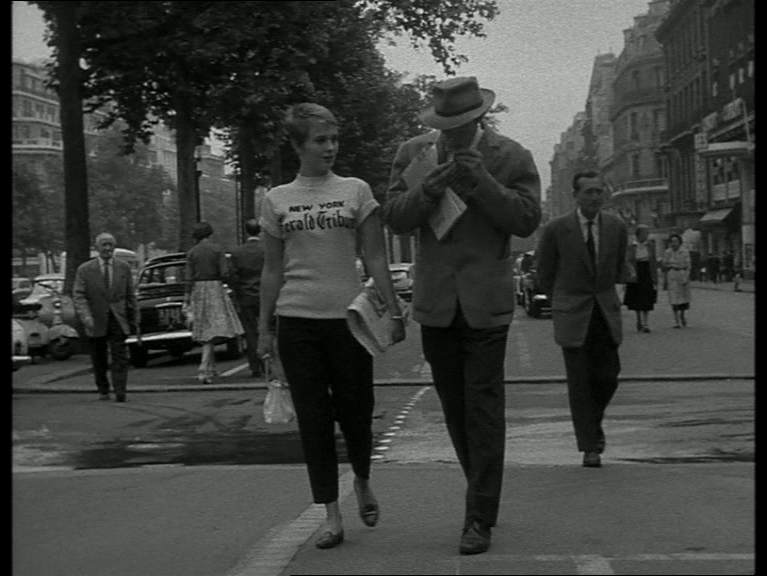
Paris was again immortalised by the camera in Rivette’s ‘Paris Belongs to Us’, which reveals diverse aspects and districts of the French capital.
In the same vein, Eric Rohmer’s first movie ‘The Sign of Leo’ features a map of Paris as the film’s central motif where all of its plots begin and end.
Paris as a home town
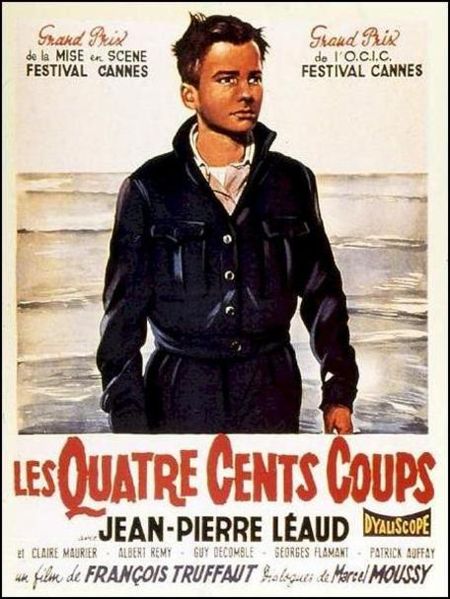
François Truffaut’s ‘The 400 Blows’ is allows us to experience the everyday reality of life in Paris. The film is centred on Antoine Doinel, who, together with his friend René, plays truant and passes his days by walking the city, reading and going to the cinema.
In this film, Truffaut presents a touching and idealised version of Paris which serves as the backdrop to the life of the film’s hero, played by Jean-Pierre Léaud. Imbuing the film with authenticity, the director portrays Paris as a home town in a loyal and familiar way, affirming the city’s charm.
Read more HERE
THROW ME A BONE HERE, PEOPLE!
What are ya thinkin’?
French Country Travel Life Southern Wine

This variety of French Country Travel Life Southern Wine is way South. South of Provence. South of Languedoc even. So far South, in fact, that it’s in Africa. The Northern part. Morocco, to be exact.
If you thought (as DA BG did in a less educated epoch) that Wine wasn’t “on the menu” down there because it’s a Muslim country – time to think again!
Or you’ll be opposing our pals at new24.com and an esteemed wino. (and yes, they are the best kind!)
“In Morocco we are undeniably in a land of vines,” says wine specialist Stephane Mariot.
“Here there is a microclimate which favours the production of ‘warm wines’, even though we aren’t far from the ocean,” adds the manager of Oulad Thaleb, a 2,000-hectare vineyard in Benslimane, 30 kilometres (18 miles) northeast of Casablanca, which he has run for five years.
The social climate in the North African county is less propitious, however, with the election of the Islamist Party of Justice and Development in 2011, and the fact that Moroccan law prohibits the sale of alcohol to Muslims, who make up 98 percent of the population.
In practice though alcohol is tolerated and well-stocked supermarkets do a brisk trade in the main cities where there is a growing appetite for decent wine.
According to some estimates, 85 percent of domestic production is drunk locally, while around half of total output is considered good quality.
“Morocco today produces some good wine, mostly for the domestic market, but a part of it for export, particularly to France,” says Mariot.
Annual output currently stands at about 400,000 hectolitres, or more than 40 million bottles of wine, industry sources say, making the former French protectorate the second biggest producer in the Arab world.
By comparison, neighbouring Algeria, whose vineyards were cultivated for a much longer period during French colonial rule, produces 500,000 hectolitres on average, and Lebanon, with its ancient viticulture dating to the pre-Roman era, fills about six million bottles annually.
Some of Morocco’s wine regions — such as Boulaouane, Benslimane, Berkane and Guerrouane — are gaining notoriety.
Already it has one Appellation d’Origine Controlee — controlled designation of origin, or officially recognised region — named “Les Coteaux de l’Atlas”, and 14 areas with guaranteed designation of origin status, most of them concentrated around Meknes, as well as Casablanca and Essaouira.
And in March last year, an association of Moroccan sommeliers was set up in Marrakesh bringing together 20 wine experts.
In the central Meknes region, nestled between the Rif Mountains and the Middle Atlas, there is evidence that wine production dates back some 2,500 years.
But the industry was transformed during the time of the protectorate (1912-1956), when the kingdom served as a haven for migrating French winemakers after the phylloxera pest decimated Europe’s vineyards around the turn of the 20th century.
As in Algeria and Tunisia, the French planted vineyards extensively, with Morocco’s annual production exceeding three million hectolitres in the 1950s.
The main grape varieties used to produce the country’s red wines are those commonly found around the Mediterranean, such as Grenache, Syrah, Cabernet-Sauvignon and Merlot.
Mariot, the manager of Oulad Thaleb, boasts that the domain, which he says has the oldest wine cellar in use in the kingdom, built by a Belgian firm in 1923, produces one of Morocco’s “most popular wines”.
Standing by a barrel, he casts a proud eye on the vintage, describing it as a “warm and virile wine”.
Abderrahim Zahid, a businessman and self-styled “lover of fine Moroccan wines” who sells them abroad, says the country now produces “a mature wine which we can be proud of”.
Morocco’s wine industry now employs up to 20,000 people, according to unofficial figures, and generated about 130 million euros ($170 million) in 2011.
But the remarkable progress made by the sector in recent years has taken place within a sensitive social environment.
While alcohol production is permitted by state law, and supermarkets and bars enforce no special restrictions on Muslim customers, officially the sale and gift of alcoholic drinks to Muslims is illegal. They are unavailable during Islamic festivals, including throughout the holy month of Ramadan.
Read more HERE.
THROW ME A BONE HERE, PEOPLE!
What are ya thinkin’?